Crochet Hook Sizes: Complete Beginner’s Guide
If you’re new to crochet, choosing the right hook can feel surprisingly confusing. Crochet hooks come in many sizes, and you may see measurements in millimeters, letters, or numbers depending on the pattern and where it was written.
Understanding crochet hook sizes is important because the hook you choose affects the size, texture, and overall appearance of your stitches.
In this beginner-friendly guide, you’ll learn what crochet hook sizes mean, how to match a hook to your yarn, how hook size affects gauge, and what to do when your finished crochet fabric doesn’t look the way you expected.
What Do Crochet Hook Sizes Mean?
A crochet hook size generally refers to the diameter of the hook’s shaft.
Metric sizing expresses this measurement in millimeters (mm).
For example:
- 3.5 mm
- 4 mm
- 5 mm
- 6 mm
As the millimeter measurement increases, the hook becomes larger.
A larger hook generally creates larger stitches, while a smaller hook generally creates smaller stitches when you’re working with the same yarn.
However, hook labeling systems can vary between countries and manufacturers. That’s why checking the millimeter measurement is especially useful when comparing hooks.
Why Crochet Hook Size Matters
Your hook isn’t simply a tool for pulling yarn through loops. Its size helps determine how large those loops become.
Changing the hook size can affect:
Gauge: The number of stitches and rows within a specific measurement.
Fabric density: Smaller hooks can produce a firmer fabric, while larger hooks can create a looser fabric.
Finished dimensions: A project can become larger or smaller when your gauge changes.
Drape: Hook size can influence whether the fabric feels stiff or flows more freely.
This becomes particularly important when making garments, hats, or other projects where finished measurements matter.
Crochet Hook Size Chart
The following chart gives beginners a simple overview of commonly encountered metric hook sizes.
| Metric Size | General Size Range |
|---|---|
| 2–3 mm | Small |
| 3.5–4.5 mm | Medium-small |
| 5–6 mm | Medium |
| 6.5–8 mm | Large |
| 9 mm and above | Extra large |
Treat this as a general orientation rather than a universal yarn-matching chart.
Yarn construction, fiber, pattern design, personal tension, and manufacturer recommendations can all affect which hook works best.
Metric vs. US Crochet Hook Sizes
One reason beginners become confused is that crochet hooks aren’t labeled using one universal naming system.
In the United States, you may encounter letters and numbers such as:
- G
- H
- I
- J
You may also see the corresponding metric measurement printed on the hook.
For example, a pattern might specify a hook using both a letter designation and a millimeter size.
Because letter and number conventions can vary, use the metric measurement whenever you need the most direct comparison between hooks. For standardized crochet hook and knitting needle sizing information, you can also check the Craft Yarn Council’s Hooks & Needles Standards.
How to Choose a Crochet Hook for Your Yarn
The easiest starting point is the yarn label.
Most commercially packaged yarn includes information about the yarn and may provide a recommended crochet hook size or range.
But remember: this recommendation is a starting point, not an absolute rule.
The final hook you need depends on your pattern and your own crochet tension.
Step 1: Check the Yarn Label
Look for the crochet hook symbol or recommended hook measurement.
This gives you a sensible place to begin.
Step 2: Check Your Pattern
If you’re following a crochet pattern, prioritize the hook and gauge information provided by the pattern designer.
For projects where size matters, the gauge is often more important than simply using the exact hook listed.
If you’re still learning how crochet instructions work, read our How to Read a Crochet Pattern for Beginners guide before starting your next project.
Step 3: Make a Gauge Swatch When Size Matters
Crochet a small sample using the yarn, hook, and stitch specified in your pattern.
Measure your stitches and rows, then compare them with the pattern’s gauge.
This can save you from discovering halfway through a project that your work is significantly too large or too small.
What Is Crochet Gauge?
Gauge describes how many stitches and rows fit within a specified measurement.
Two people can use the same yarn and the same crochet hook but produce different gauges because they hold and tension their yarn differently.
For example, one crocheter may naturally make tight stitches while another makes loose stitches.
That’s why the hook printed in a pattern should not always be treated as an unchangeable requirement.
The goal is usually to achieve the required gauge.
What If Your Crochet Gauge Is Too Tight?
If your swatch has more stitches within the specified width than the pattern requires, your stitches may be too small.
One possible adjustment is to try a larger crochet hook.
Make another swatch and measure again.
Continue adjusting until you’re reasonably close to the pattern’s required gauge.
What If Your Crochet Gauge Is Too Loose?
If your swatch has fewer stitches within the specified width, your stitches may be larger than required.
Try moving to a smaller crochet hook, then make another swatch.
Changing hook size gradually is usually better than making a dramatic jump.
How Hook Size Changes Crochet Fabric
A useful beginner experiment is to crochet several small swatches using the same yarn and stitch but different hook sizes.
You’ll notice that the fabric changes even though the yarn remains identical.
Smaller Hook
A smaller hook may create:
- Smaller loops
- Tighter fabric
- Less drape
- More compact stitches
Larger Hook
A larger hook may create:
- Larger loops
- More open fabric
- Greater drape
- A looser appearance
Neither result is automatically better.
The appropriate choice depends on what you’re making.
Which Crochet Hook Is Best for Beginners?
For your first practice projects, a medium-sized hook paired with a suitable medium-weight yarn is often easier to handle than an extremely tiny or oversized hook.
More important than chasing one supposedly perfect beginner size is choosing a combination that lets you:
- See your stitches clearly
- Insert the hook comfortably
- Control the yarn
- Practice without excessive hand strain
Once you’re comfortable making basic stitches, experimenting with different sizes becomes much easier.
If you’re completely new to crochet, start with our How to Crochet for Absolute Beginners guide before moving on to more specialized techniques.
Aluminum, Plastic, or Wooden Crochet Hooks?
Size isn’t the only difference between crochet hooks.
The material can also affect how the hook feels in your hand and how easily yarn moves across its surface.
Aluminum Hooks
Aluminum hooks are widely available and have a smooth surface that can help yarn slide easily.
They’re a practical option for many beginners.
Plastic Hooks
Plastic hooks are lightweight and are commonly available in larger sizes.
Some crocheters enjoy their lighter feel.
Wooden or Bamboo Hooks
Wood and bamboo can provide slightly more friction against the yarn than very smooth metal hooks.
Some crocheters prefer this extra control, while others prefer faster-gliding metal hooks.
There isn’t one material that’s best for everyone.
Comfort and yarn behavior matter more than choosing the material another crocheter prefers.
Inline vs. Tapered Crochet Hooks
You may also notice that crochet hooks have different head shapes.
Two commonly discussed styles are inline and tapered hooks.
Inline hooks tend to have a more defined throat and head alignment, while tapered hooks transition more gradually toward the hook head.
Beginners don’t need to worry too much about choosing the “correct” style.
Try both when possible and use whichever feels more comfortable with your crochet technique.
Common Crochet Hook Mistakes Beginners Make
Assuming the Recommended Hook Is Mandatory
A yarn label or pattern gives you a starting point, but gauge and the desired fabric are ultimately more important.
Ignoring Millimeter Measurements
Letters and numbers can be confusing across different sizing systems.
Checking the millimeter measurement makes comparison easier.
Skipping the Gauge Swatch
For a coaster or simple practice square, exact gauge may not matter much.
For a fitted beanie, garment, or another size-sensitive project, it can matter considerably.
Changing Yarn Without Reconsidering the Hook
A hook that works beautifully with one yarn may not produce the same result with another.
Buying Every Hook Size Immediately
Beginners don’t necessarily need a huge collection.
Start with the sizes required for the projects you’re actually planning to make, then expand your collection over time.
When Gauge Matters — and When It Doesn’t
Not every crochet project requires the same level of precision.
Gauge is especially important for:
- Sweaters
- Cardigans
- Hats
- Fitted accessories
- Projects with precise finished dimensions
Gauge is often less critical for:
- Simple scarves
- Decorative motifs
- Some blankets
- Practice swatches
- Certain home décor projects
Even when exact dimensions aren’t essential, however, hook size still affects the appearance and feel of your finished fabric.
How to Organize Your Crochet Hooks
Once your collection grows, finding the correct size can become surprisingly annoying.
A simple hook case with labeled compartments can help.
You can also keep a small note listing:
- Hook size
- Material
- Projects you’ve used it for
- Yarn combinations you liked
This becomes particularly useful when you discover a hook-and-yarn combination that produces a fabric you love.
Try Your Hook on a Beginner Project
Once you’ve chosen a comfortable hook and yarn combination, practice is the best way to understand how hook size affects your stitches.
You could start with our Easy Granny Square Crochet Pattern for Beginners, where you’ll practice basic stitches while creating a useful motif.
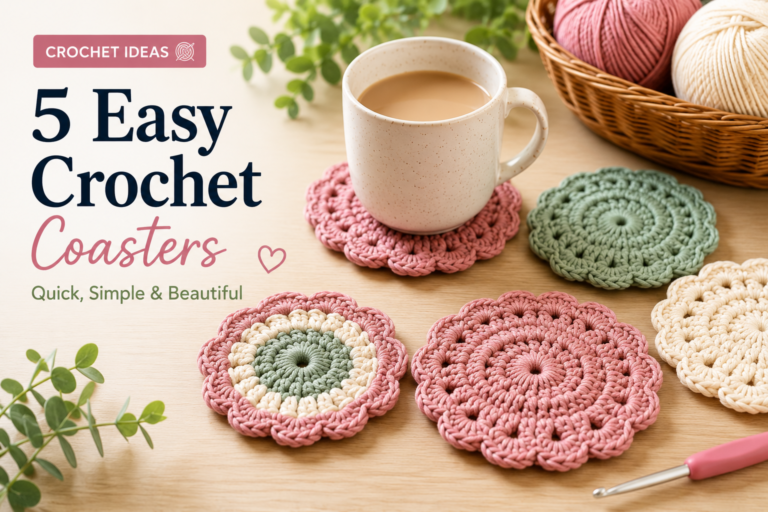
For another straightforward project, try our 5 Easy Crochet Coasters for Your Home.
As you become more comfortable, our How to Crochet a Scarf for Beginners gives you a larger project for practicing consistent tension.
Frequently Asked Questions About Crochet Hook Sizes
Does a bigger crochet hook make bigger stitches?
Generally, yes. When using the same yarn and stitch, increasing the hook size usually produces larger loops and a looser fabric.
What happens if I use a hook that’s too small?
Your fabric may become tighter and denser, and your gauge may be smaller than the pattern requires.
What happens if I use a hook that’s too large?
Your stitches may become larger and the fabric more open. Your finished project may also become larger if the gauge changes.
Should I follow the hook size on the yarn label or the pattern?
When following a pattern, use the pattern’s hook recommendation as your starting point and check the required gauge. The yarn label recommendation is useful when choosing a hook for general practice or an unstructured project.
Why do two people get different results with the same hook?
Crocheters naturally hold and tension yarn differently. That’s one reason gauge swatches are useful for projects where dimensions matter.
Do I need every crochet hook size?
No. Beginners can build their collection gradually according to the yarns and projects they actually use.
Final Thoughts
Understanding crochet hook sizes gives you much more control over your crochet projects.
Instead of thinking of the hook size printed on a pattern as an arbitrary number, you’ll understand how it influences stitch size, gauge, fabric density, drape, and finished dimensions.
Start with the recommended size, make a swatch when dimensions matter, and adjust your hook if your gauge doesn’t match.
With experience, choosing the right hook becomes much more intuitive.