How to Crochet for Absolute Beginners: Complete Step-by-Step Guide
Learning how to crochet can feel confusing at first, but you only need a few basic skills to get started. With a crochet hook, some yarn, and a little practice, you can begin making beautiful handmade projects at home.
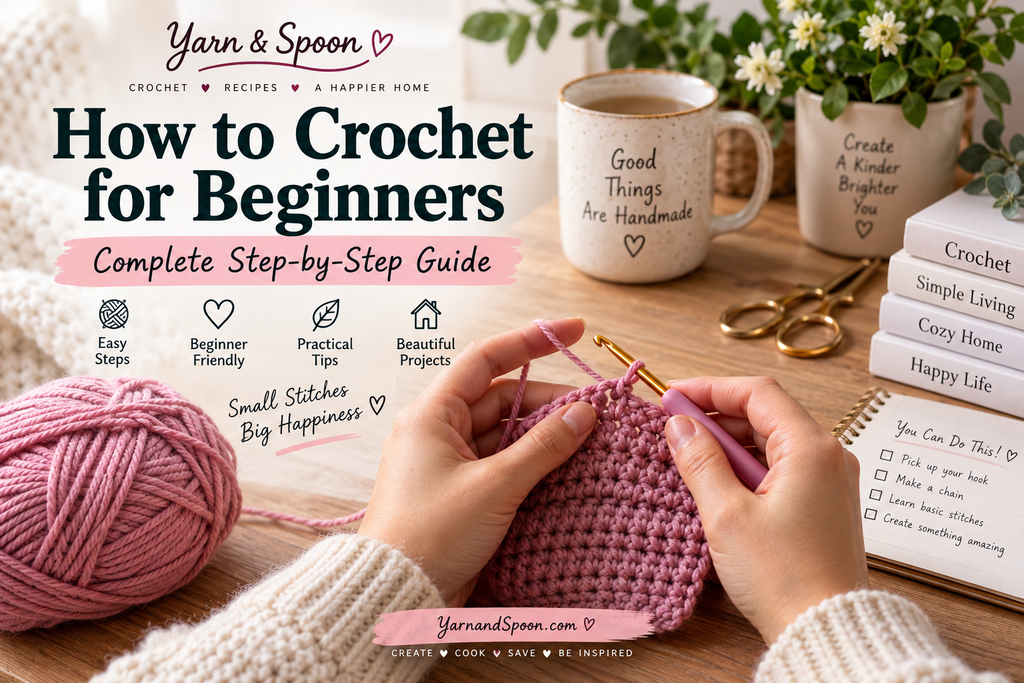
In this beginner-friendly guide, you’ll learn how to crochet step by step, from choosing your first hook and yarn to making a slip knot, crochet chain, single crochet, and double crochet.
What Do You Need to Start Crocheting?
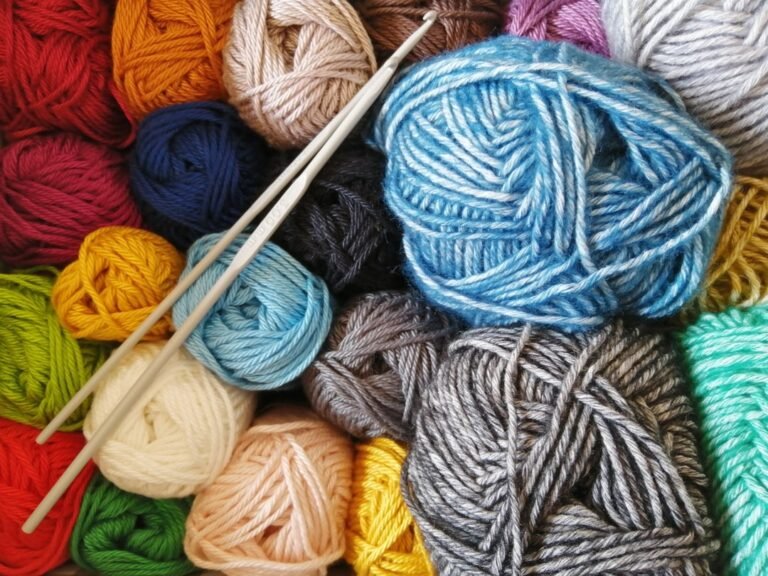
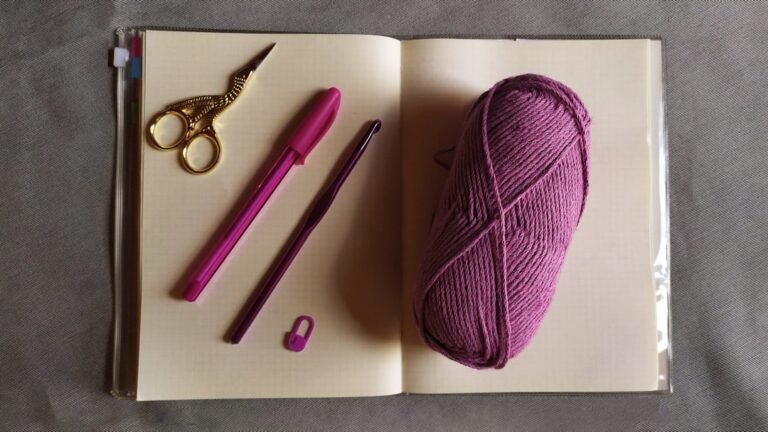
You don’t need a large collection of supplies to learn crochet. Start with just a few basics:
- Medium-weight yarn (often labeled #4)
- A 5 mm or 5.5 mm crochet hook
- Scissors
- Yarn needle
- Stitch markers (optional)
For your first project, choose a light-colored, smooth yarn. Dark or fuzzy yarn can make it harder to see individual stitches.
Step 1: Learn How to Hold the Crochet Hook
There isn’t one perfect way to hold a crochet hook.
Two common methods are the pencil grip and knife grip.
With the pencil grip, you hold the hook similarly to a pencil. With the knife grip, you hold it more like a table knife.
Try both and use whichever feels comfortable. The important thing is being able to move the hook without gripping it too tightly.
Step 2: Make a Slip Knot
A slip knot creates the first loop on your crochet hook.
- Make a loop with your yarn.
- Bring a section of yarn through the loop.
- Insert your crochet hook into the new loop.
- Gently pull the working yarn until the loop fits comfortably around the hook.
The loop should move easily along the hook without being extremely loose or tight.
Step 3: Make a Crochet Chain
The chain stitch is one of the first stitches every beginner should learn.
After making your slip knot:
- Hold the hook in your dominant hand.
- Hold the working yarn with your other hand.
- Wrap the yarn over your hook. This is called a yarn over.
- Pull the yarn through the loop already on your hook.
You’ve made your first chain!
Repeat the process several times until you have a short foundation chain.
Don’t worry if your first chains aren’t perfectly even. Maintaining consistent yarn tension becomes easier with practice.
Step 4: Learn the Single Crochet Stitch
Single crochet is a simple, compact stitch used in countless crochet projects.
The US abbreviation for single crochet is sc.
To make a single crochet:
- Insert your hook into the appropriate chain or stitch.
- Yarn over.
- Pull the yarn through the stitch. You should now have two loops on your hook.
- Yarn over again.
- Pull through both loops.
You have completed one single crochet.
Continue across the row, working one stitch at a time.
Step 5: Learn the Double Crochet Stitch
Double crochet creates a taller stitch than single crochet and works up quickly.
The US abbreviation is dc.
To make a double crochet:
- Yarn over.
- Insert the hook into the stitch.
- Yarn over and pull up a loop.
- You should now have three loops on your hook.
- Yarn over and pull through the first two loops.
- Yarn over again and pull through the remaining two loops.
That’s one double crochet stitch.
Step 6: Learn How to Turn Your Work
When you reach the end of a row, you’ll usually need to turn your work before beginning the next row.
Patterns may instruct you to make one or more turning chains before starting the next row. The number depends on the stitch and the pattern.
Always follow the instructions in the pattern you’re using.
Step 7: Learn Basic Crochet Abbreviations
Crochet patterns commonly use abbreviations to keep instructions short.
Here are several common US crochet terms:
| Abbreviation | Meaning |
|---|---|
| ch | Chain |
| sc | Single Crochet |
| hdc | Half Double Crochet |
| dc | Double Crochet |
| sl st | Slip Stitch |
| st | Stitch |
| sts | Stitches |
| rep | Repeat |
Crochet terminology can differ between the US and UK, so always check which terminology a pattern uses.
You can also refer to the Craft Yarn Council’s crochet standards when you encounter an unfamiliar abbreviation.
How to Count Crochet Stitches
Learning to count your stitches can prevent your project from accidentally becoming wider or narrower.
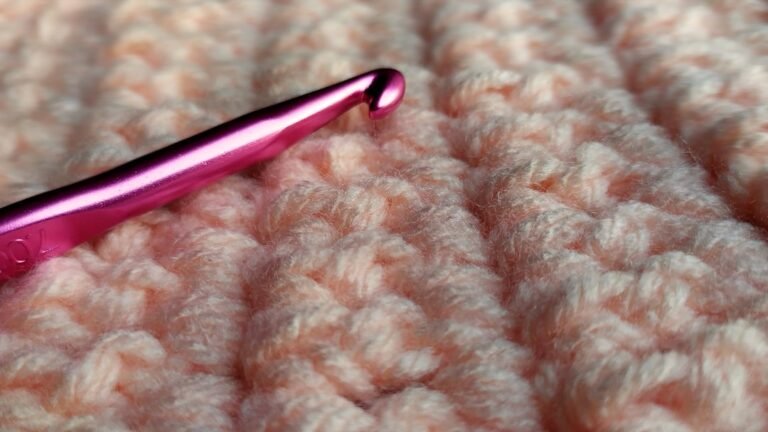
Look at the top of your crochet row. Each stitch usually forms a small V shape.
Count each V as one stitch unless your pattern tells you otherwise.
Stitch markers can also help beginners mark the first or last stitch of a row.
Common Beginner Crochet Mistakes
Your first crochet project doesn’t need to be perfect. Some common beginner problems include:
Crocheting too tightly: If inserting your hook becomes difficult, try relaxing your hands and loosening your yarn tension.
Crocheting too loosely: If your stitches have large gaps, try maintaining slightly more consistent tension.
Losing stitches: Count your stitches after each row while you’re learning.
Adding accidental stitches: Pay attention to the first and last stitch of each row.
Choosing difficult yarn: Smooth, light-colored yarn makes it much easier to see what you’re doing.
What Should a Beginner Crochet First?
Once you’re comfortable making chains and basic stitches, start with small and forgiving projects.
Good beginner projects include:
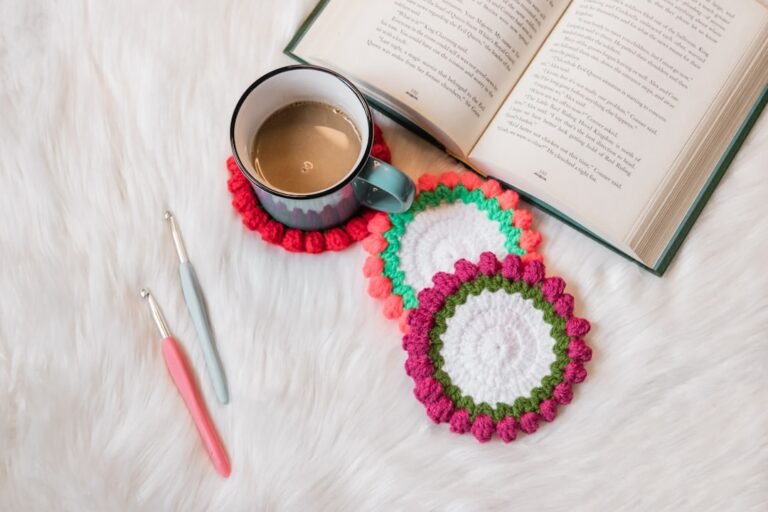
- Crochet coasters
- Granny squares
- Simple scarves
- Basic beanies
- Small washcloths
On Yarn & Spoon, you can continue practicing with our Easy Granny Square Crochet Pattern for Beginners, 5 Easy Crochet Coasters for Your Home, How to Crochet a Scarf for Beginners, and How to Crochet a Beanie for Beginners.
How Long Does It Take to Learn Crochet?
There’s no fixed timeline.
Some people understand the basic stitches in one afternoon, while others need several practice sessions before their hands become comfortable with the movements.
Instead of focusing on speed, practice making even chains and rows. Even 15–20 minutes of regular practice can help you become more comfortable with controlling the hook and yarn.
Final Thoughts
Learning how to crochet starts with a handful of simple techniques.
Once you can make a slip knot, chain stitches, single crochet, and double crochet, you’ll have the foundation needed for many beginner projects.
Practice slowly, count your stitches, and don’t worry about making perfectly even rows immediately. Your tension and stitch consistency should improve as you crochet more often.
When you’re ready, choose a small project and turn those first stitches into something you can actually use.